Healthspan starts with everyday capability
Being able to walk, climb stairs, carry and take part in activities you value is a useful starting point. Longevity is a long-term perspective, not a single treatment or technology.
Use cases
Think beyond a short burst of motivation. Build a relationship with movement that can last.
Have a training goal in mind?
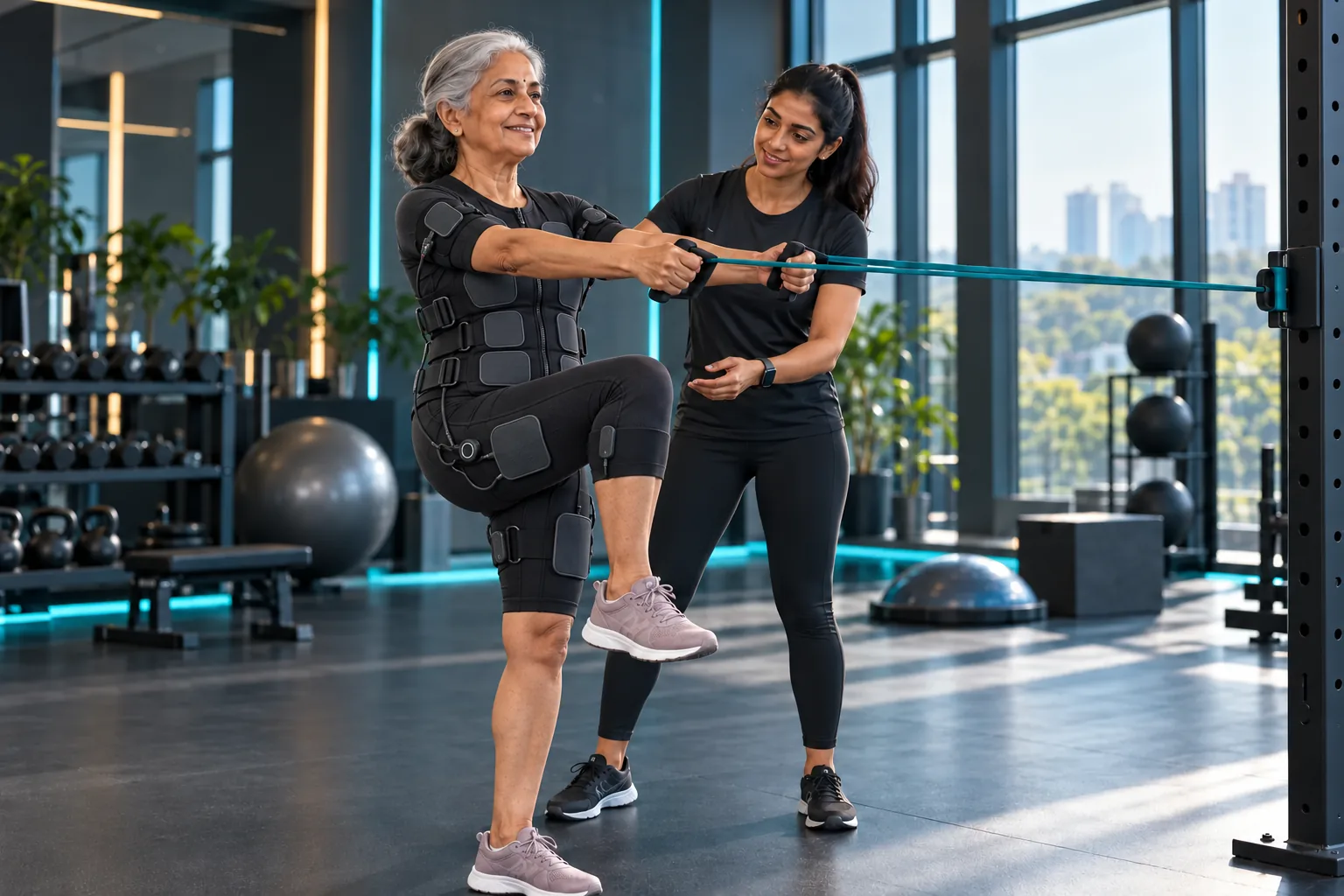
Request a guided sessionStart here. EMS means electrical muscle stimulation: pads in a suit deliver controlled pulses while you move with a trainer. Suitability and the wider training plan still matter.
Being able to walk, climb stairs, carry and take part in activities you value is a useful starting point. Longevity is a long-term perspective, not a single treatment or technology.
A sustainable routine considers resistance exercise, aerobic activity, balance, recovery and sleep. EMS may be one screened exercise option; it does not replace the complete routine.
Ask what can fit into an ordinary week, not an ideal one. Appropriate guidance and manageable commitments matter more than a dramatic first session.
A study showing a change in strength does not demonstrate longer life. We do not claim that EMS increases lifespan, reverses ageing or prevents disease.
Think in years. Act this week.
Include walking and aerobic activity.
Give strength and balance a place.
Make room for sleep and recovery.
We do not make that claim. EMS may be considered as one exercise method after screening. Longevity here means a long-term perspective on physical capability, not a treatment or promise of additional years.