Conventional resistance training
Weights, machines, bands and bodyweight movements provide external resistance. They can support progressive loading and development of movement skills.
EMS science
Choose a training approach with a clear view of what it does—and what it does not replace.
Questions about EMS or suitability?
Request a guided sessionStart here. Normally your brain signals a muscle through nerves. EMS uses electrodes on the skin to activate nearby motor nerves while you deliberately exercise.
Weights, machines, bands and bodyweight movements provide external resistance. They can support progressive loading and development of movement skills.
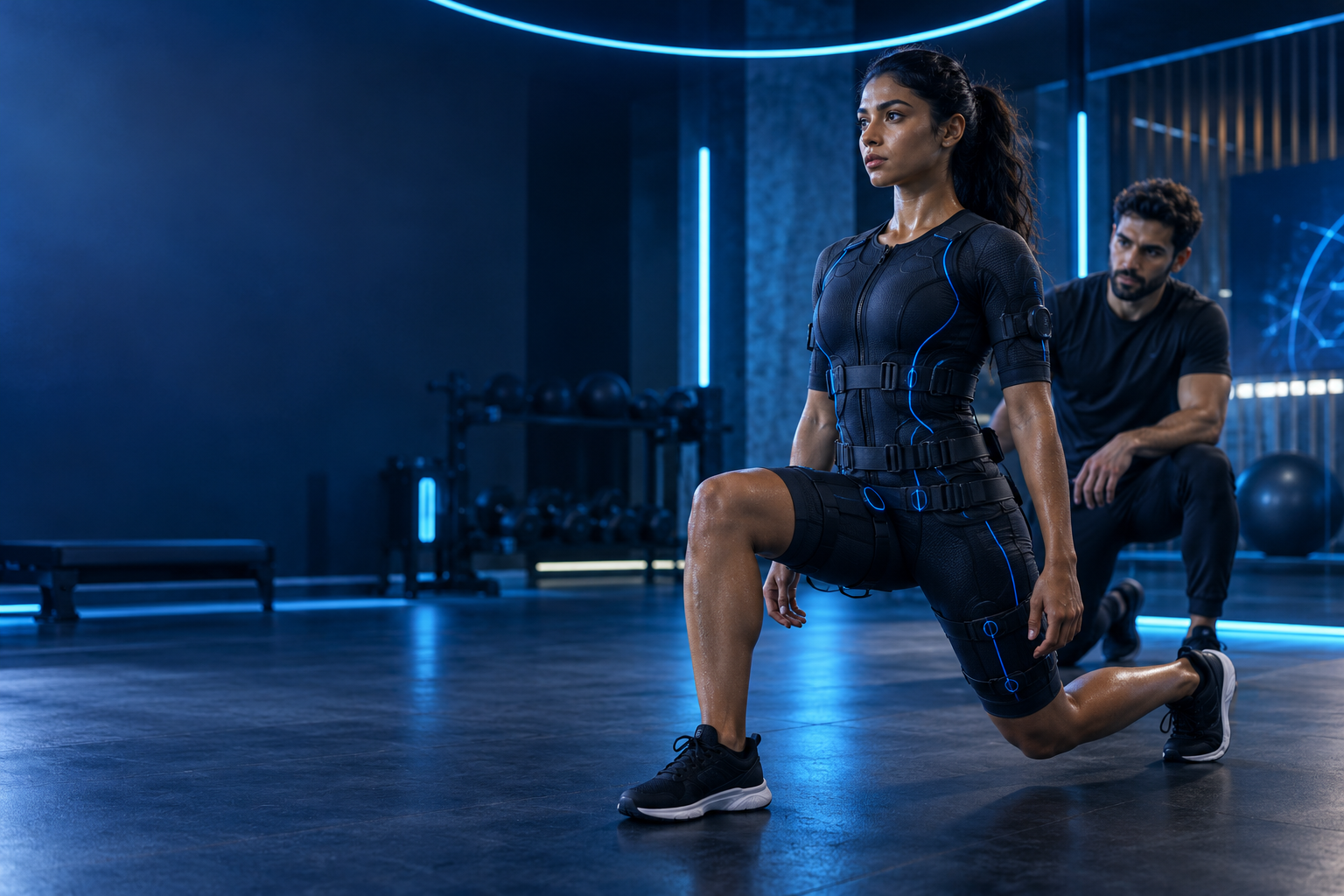
Electrical stimulation adds a training stimulus while you perform guided movement. Suit setup, screening and supervision are part of the experience.
The useful comparison is what each method asks of you, what it can be adjusted for and what it leaves out.
Conventional resistance comes from an external load or bodyweight. EMS adds a timed electrical stimulus through electrodes.
Both approaches still rely on appropriate movement. Neither is improved by poor technique or chasing intensity blindly.
EMS requires suit setup, screening and an attentive trainer. Conventional training can range from independent to closely coached.
Strength work sits alongside aerobic activity, balance, recovery and the rest of your daily movement.
That depends on your starting point, preferences, suitability and the plan you can follow consistently. A first conversation can clarify whether EMS belongs in that plan.
A shorter session does not automatically deliver equivalent results to a longer workout. Avoid simple minutes-to-hours conversion claims.
Aerobic activity, strength, balance, sleep and recovery all contribute to fitness. EMS may be one component of a broader routine rather than a complete replacement.