Start with movements that matter
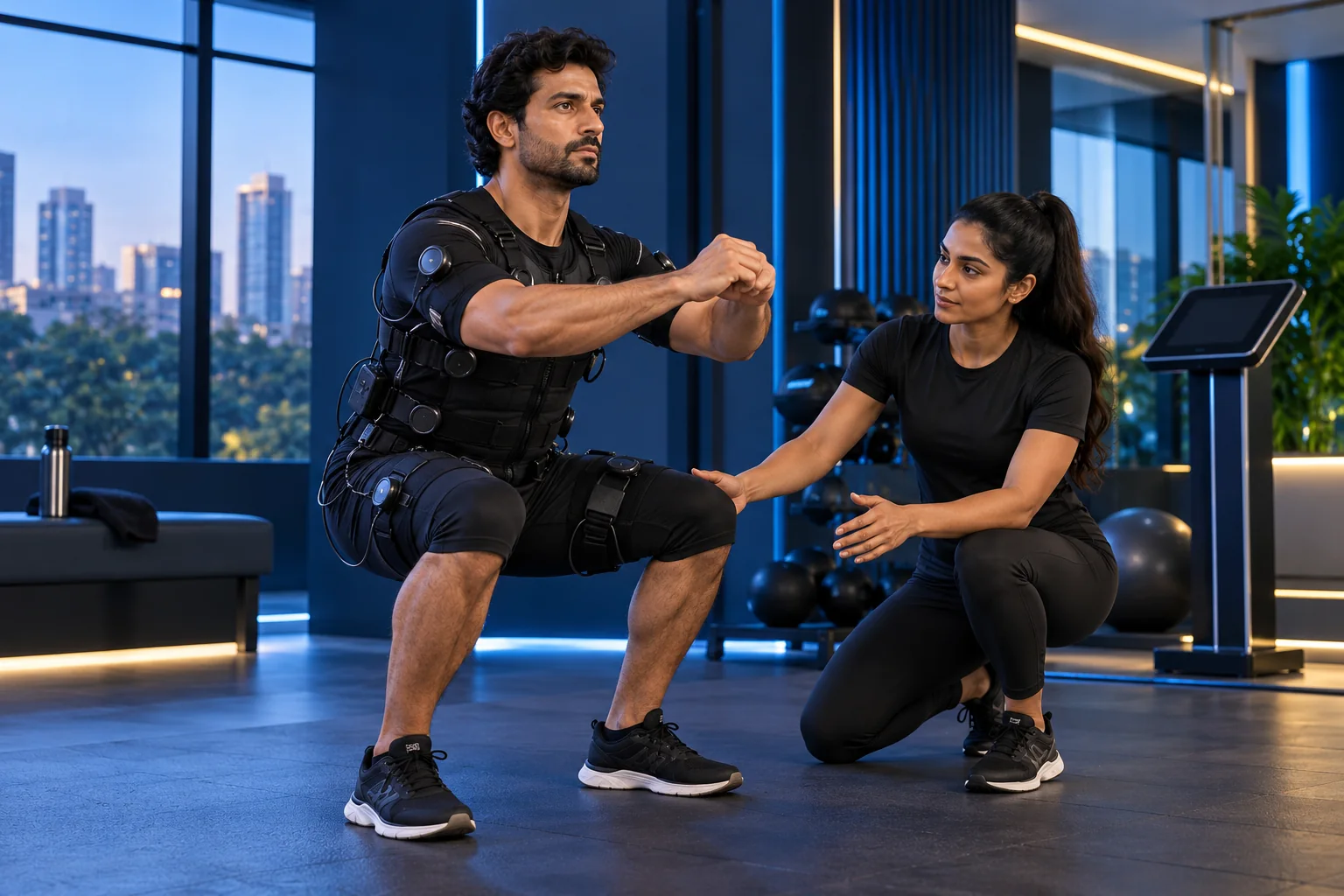
A training routine can include squats, hinges, presses and pulling patterns. Your starting point, movement confidence and ability to recover should shape the session.
Use cases
Carrying, climbing, lifting, moving. Strength matters long after a session ends.
Have a training goal in mind?
Request a guided sessionStart here. EMS means electrical muscle stimulation: pads in a suit deliver controlled pulses while you move with a trainer. Suitability and the wider training plan still matter.
A training routine can include squats, hinges, presses and pulling patterns. Your starting point, movement confidence and ability to recover should shape the session.
During whole-body EMS, electrodes stimulate muscles while you perform guided movements. The trainer adjusts the session; more stimulation is not automatically better training.
Progress depends on appropriate challenge, recovery and consistency. Ask how EMS sessions fit alongside walking, aerobic activity and conventional strength work.
Tell us about your current activity, previous training and the tasks you want to feel stronger doing. We will discuss suitability before arranging a session.
Carry it into everyday life
Getting up from a low seat.
Picking up a bag from the floor.
Moving a door, lifting or carrying.
Bring one real task to the conversation. A meaningful goal is more useful than an arbitrary intensity setting.