Put on the suit.
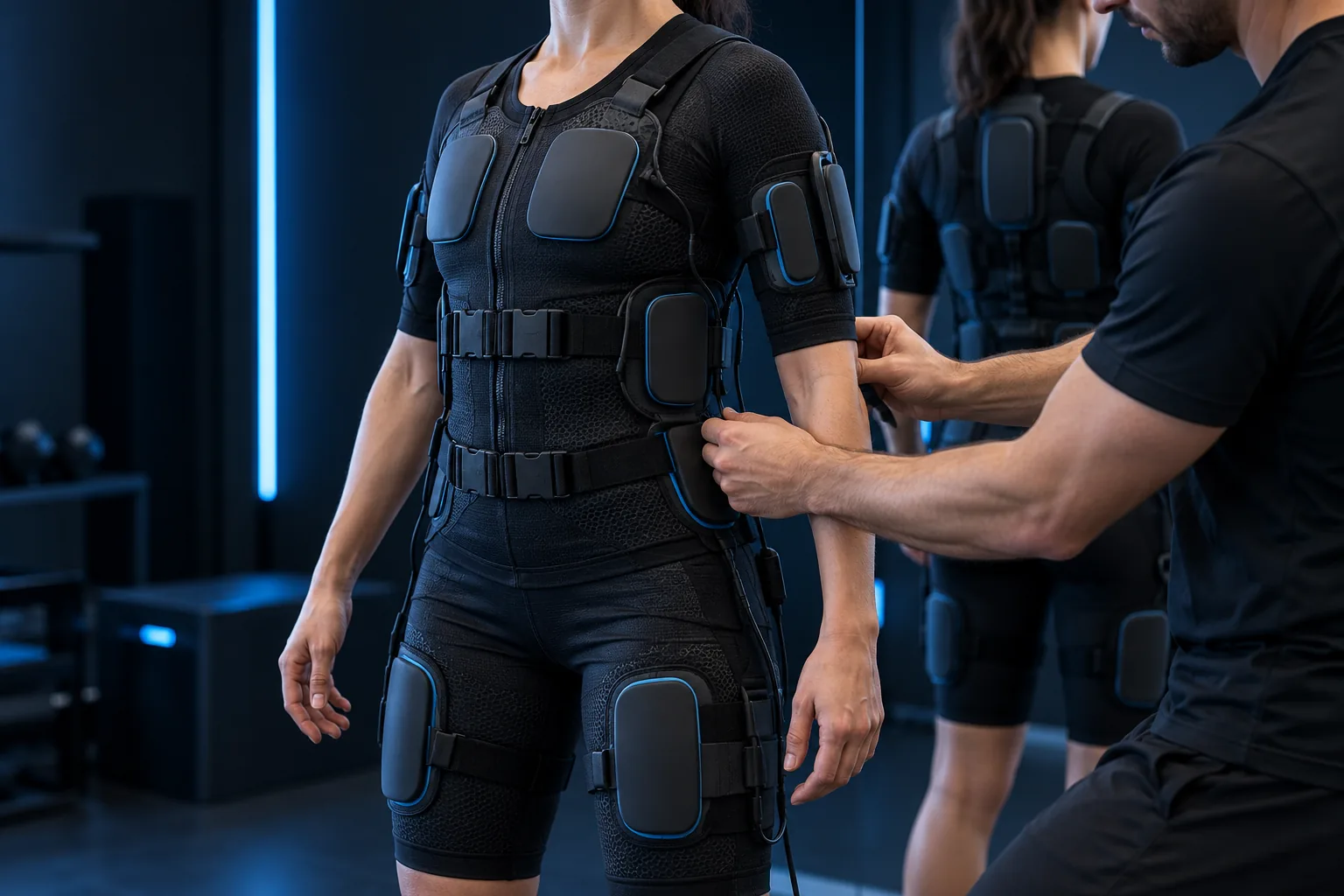
Electrode pads touch the skin over muscle groups. Your trainer checks the fit.
EMS science
Start with a simple explanation. Then explore the research, safety and how EMS fits with other exercise.
Questions about EMS or suitability?
Request a guided sessionThe mechanism
Your brain sends a message through nerves to activate a muscle.
The suit supplies a timed pulse at the skin. It bypasses the usual message from the brain by activating nearby motor nerves. You still choose the movement.
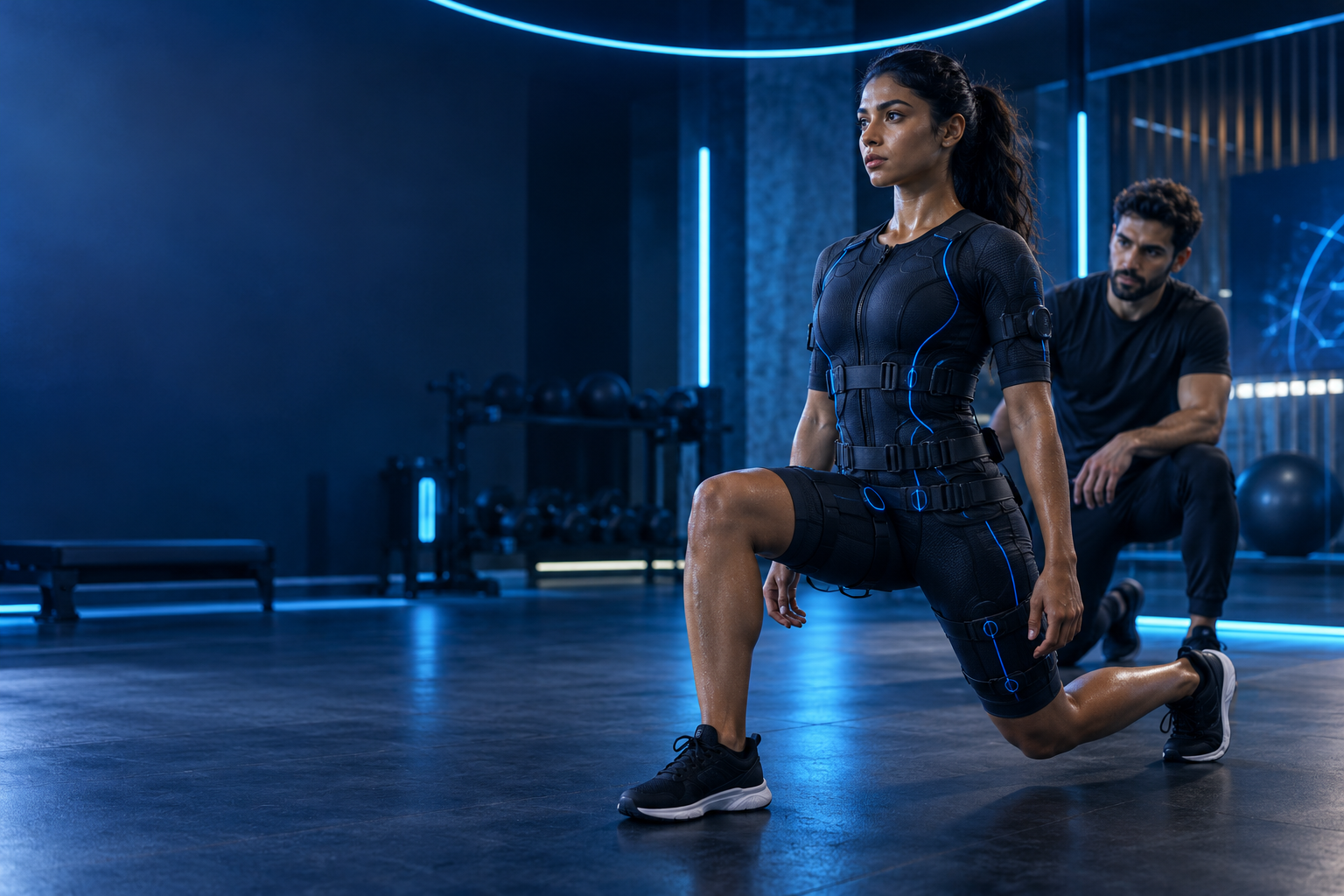
Electrode pads touch the skin over muscle groups. Your trainer checks the fit.
The pads deliver timed electrical pulses that activate nearby motor nerves. The trainer adjusts the settings with you.
You still perform the exercise. Stimulation adds a muscle contraction; it does not replace movement, effort or recovery.
Electrode contacts are held against the torso, arms, sides and thighs by the suit. A future KSL garment would need to integrate those contacts reliably. The trainer checks fit, explains the sensation and guides each movement.
Read further
EMS stands for electrical muscle stimulation. Here is what that means in a training session.
Explore 02Whole-body EMS has been studied as an exercise method. A useful reading looks beyond the headline.
Explore 03Choose a training approach with a clear view of what it does—and what it does not replace.
Explore 04Whole-body EMS is an exercise stimulus that needs appropriate preparation, supervision and recovery.
Explore 05Explore Kinetic Science Lab.
ExploreA practical starting point
Speak to KSL about your goals and health history, then decide whether guided EMS is a sensible fit.
Discuss a first session