Strength supports everyday independence
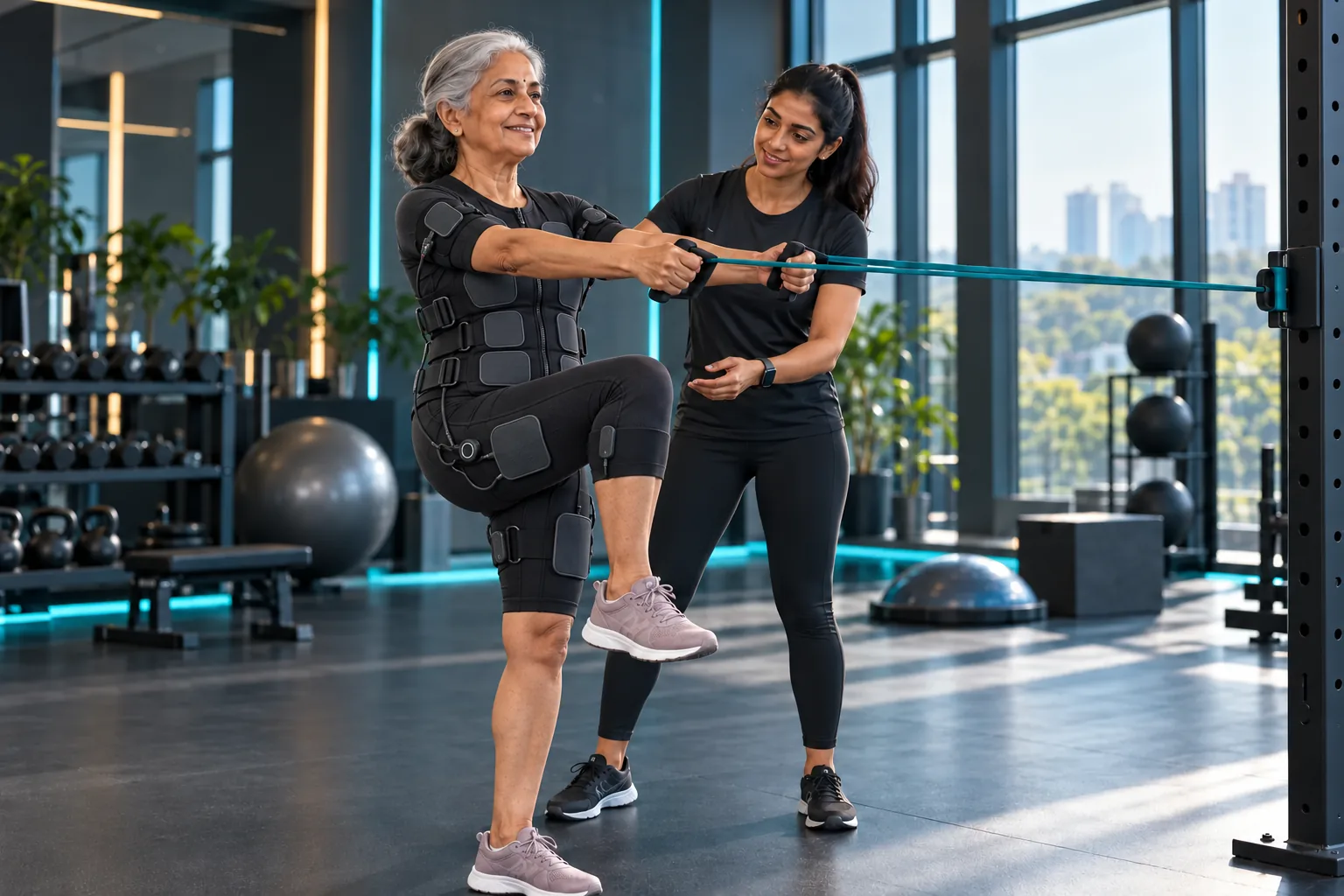
Maintaining muscle function is relevant to standing up, using stairs and carrying everyday loads. Training should reflect the person, their medical history and their confidence.
Use cases
A practical conversation about movement, independence and training that starts where you are.
Have a training goal in mind?
Request a guided sessionStart here. EMS means electrical muscle stimulation: pads in a suit deliver controlled pulses while you move with a trainer. Suitability and the wider training plan still matter.
Maintaining muscle function is relevant to standing up, using stairs and carrying everyday loads. Training should reflect the person, their medical history and their confidence.
EMS can be considered as one training option following screening. Research in older populations does not mean every older person is suitable, or that one protocol applies to everyone.
Balance, walking, mobility and aerobic fitness still matter. EMS does not replace the full range of activity that supports healthy ageing.
We use healthy ageing to describe maintaining function. We do not claim that KSL sessions extend lifespan or prevent age-related disease.
Capacity, not a birthday
Getting up and carrying everyday loads.
Confidence during everyday movement.
Keeping walking and staying active.
This guide focuses on maintaining physical function as you age. Our longevity guide takes a wider view of the habits that support an active life. Neither promises extra years of life.